People use "ketamine" and "SPRAVATO®" interchangeably, and clinics do not always help. They are related, but they are not the same drug, the same route, the same evidence, or the same experience. Here is the difference, and how I think about choosing between them for treatment-resistant depression.
The chemistry in one paragraph
Ketamine is a mixture of two mirror-image molecules, called enantiomers: S-ketamine and R-ketamine. The mixture is called racemic ketamine, and it has been used as an anesthetic since 1970. Esketamine is the S-enantiomer on its own. SPRAVATO® is esketamine formulated as a nasal spray. Both work primarily by blocking NMDA glutamate receptors, which sets off a cascade that increases synaptic plasticity, the brain's ability to form new connections, in circuits that go quiet in depression. That mechanism is why both can lift depression in hours to days rather than the weeks that serotonin-based antidepressants require.
Approval and evidence
SPRAVATO® is FDA-approved for treatment-resistant depression in adults, for depressive symptoms in adults with major depressive disorder and acute suicidal thoughts or actions, and, since January 2025, as a stand-alone treatment for treatment-resistant depression. That approval rests on randomized, placebo-controlled trials and long-term maintenance studies submitted to the FDA, and the label tells you the dose, the schedule, and the safety monitoring.
Racemic ketamine for depression is off-label. That does not mean it is unstudied; intravenous ketamine has decades of research, including head-to-head comparisons with ECT. It means no pharmaceutical company has taken it through the FDA approval process for depression, so there is no standard dose, schedule, or monitoring requirement. Every ketamine clinic sets its own protocol.
How each is given
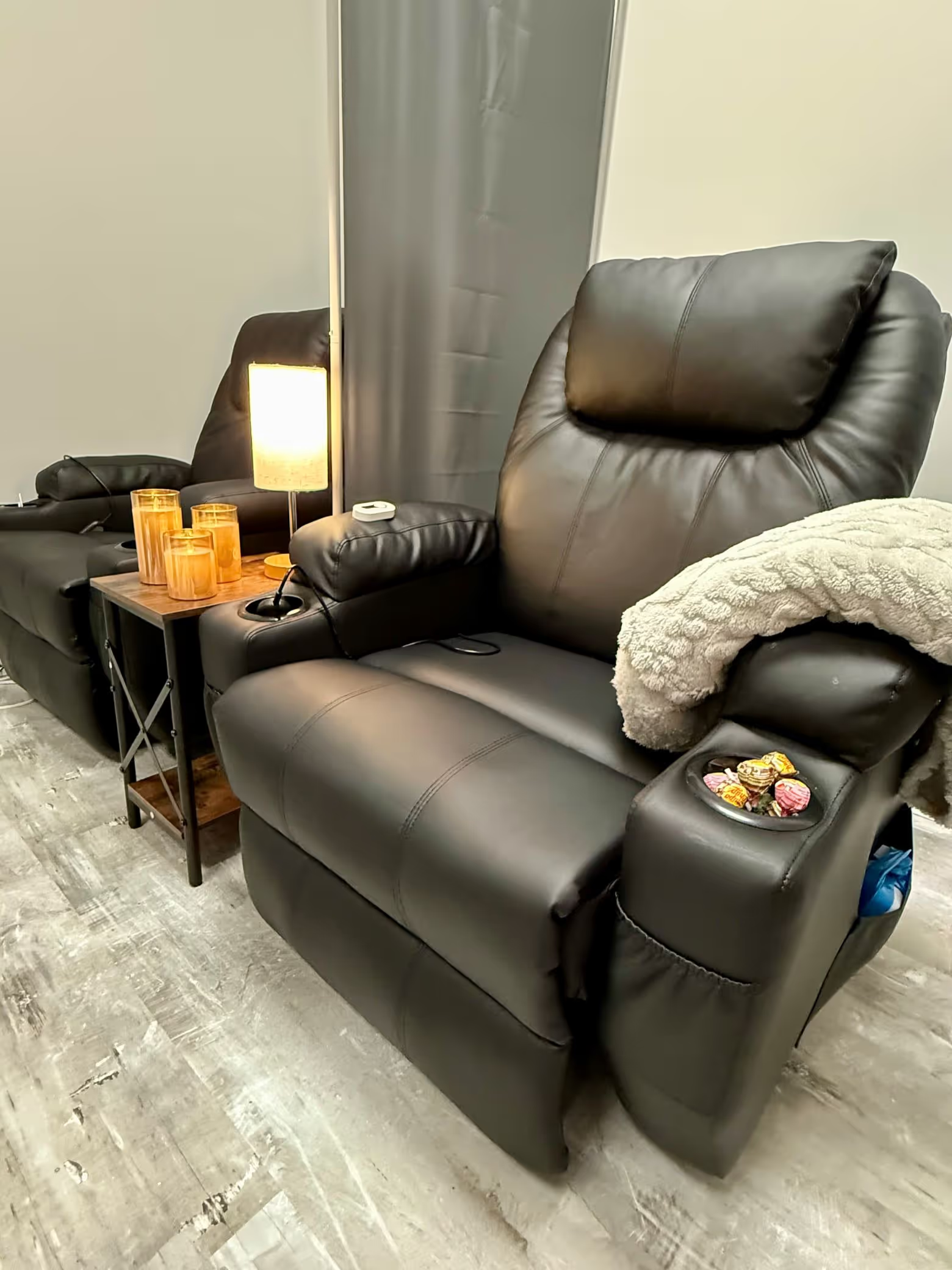
SPRAVATO® is a nasal spray that you self-administer under supervision in a REMS-certified clinic like TRIP, followed by at least two hours of monitoring. Standard dosing is twice weekly for four weeks, weekly for four weeks, then weekly or every other week.
Racemic ketamine is most commonly given as an intravenous infusion over about forty minutes, usually as a series of six infusions over two to three weeks, then boosters as needed. It is also given intramuscularly, and some telehealth companies mail sublingual lozenges or troches for home use. I will be blunt about the last one: at-home ketamine without monitoring is where I have the most concern, both for safety and for misuse, and the FDA has said as much.
Cost and insurance
This is the practical dividing line for most families. Because SPRAVATO® is FDA-approved, most commercial plans, Medicare, and many Medicaid plans cover it with prior authorization, and the manufacturer offers a savings card for commercially insured clients. Because ketamine infusions are off-label, insurance almost never covers them, and clients pay cash per infusion. A full course of IV ketamine can cost several thousand dollars out of pocket; a full course of SPRAVATO® through insurance may cost a fraction of that. Our SPRAVATO® cost guide goes into the details.
Does one work better?
Honest answer: we do not have a definitive head-to-head trial that settles it. Some clinicians believe IV racemic ketamine is more potent, in part because intravenous dosing is more precise and because R-ketamine may contribute antidepressant effects of its own. Others point out that SPRAVATO®'s maintenance data, showing that continued treatment substantially reduces relapse, is exactly the evidence ketamine clinics lack. In my practice both have helped people who had been through four, five, six medications without relief. The right choice is usually decided by access, cost, safety, and what you can sustain over months, not by a small difference in average effect.
Side effects and safety
Both cause transient dissociation, a dream-like or detached feeling, along with dizziness, nausea, and a rise in blood pressure that peaks about forty minutes in and settles within a couple of hours. Both are sedating for the rest of the day; you cannot drive after either. Longer-term risks, chiefly bladder inflammation and dependence, are associated with frequent, high-dose, unsupervised use rather than with a monitored clinical course, which is precisely why monitoring matters. Neither is appropriate for people with uncontrolled high blood pressure, certain aneurysms or vascular malformations, or an active substance use disorder involving ketamine.
How I decide
- If you have commercial insurance, Medicare, or Medicaid and meet the treatment-resistant depression criteria, I usually start with SPRAVATO® through TRIP, because it is covered, standardized, and comes with maintenance data.
- If coverage is denied and you can afford infusions, IV ketamine is a reasonable, evidence-supported alternative, and I will help you find a reputable clinic.
- If suicidal thinking is acute, SPRAVATO® carries a specific FDA indication for that situation, and both agents act quickly enough to matter.
- In every case, the treatment should be one piece of a plan that also includes an oral medication strategy, sleep, and, where appropriate, therapy. Neither ketamine nor esketamine is meant to stand alone forever.
Frequently asked questions
Is SPRAVATO® just expensive ketamine? No. It is a single enantiomer, a different route, an FDA-approved indication with a standardized protocol, and, for most people, the one that insurance will pay for.
Is the "trip" the point? No. Dissociation is a side effect, not the mechanism, and people who feel very little of it often respond just as well.
Can I do SPRAVATO® at home? No. Federal rules require that it be given in a certified clinic with monitoring, every time.
Talk to a Psychiatric Provider in Chesapeake, VA
If you are ready to be evaluated, or you simply want to ask whether we are the right fit, request an appointment or call the office at (757) 908-2124. South Chesapeake Psychiatry offers 60-minute self-pay psychiatric evaluations and ongoing medication management in Chesapeake and by secure video across Virginia. SPRAVATO® treatment is provided through TRIP, our insurance-supported interventional psychiatry service line.